
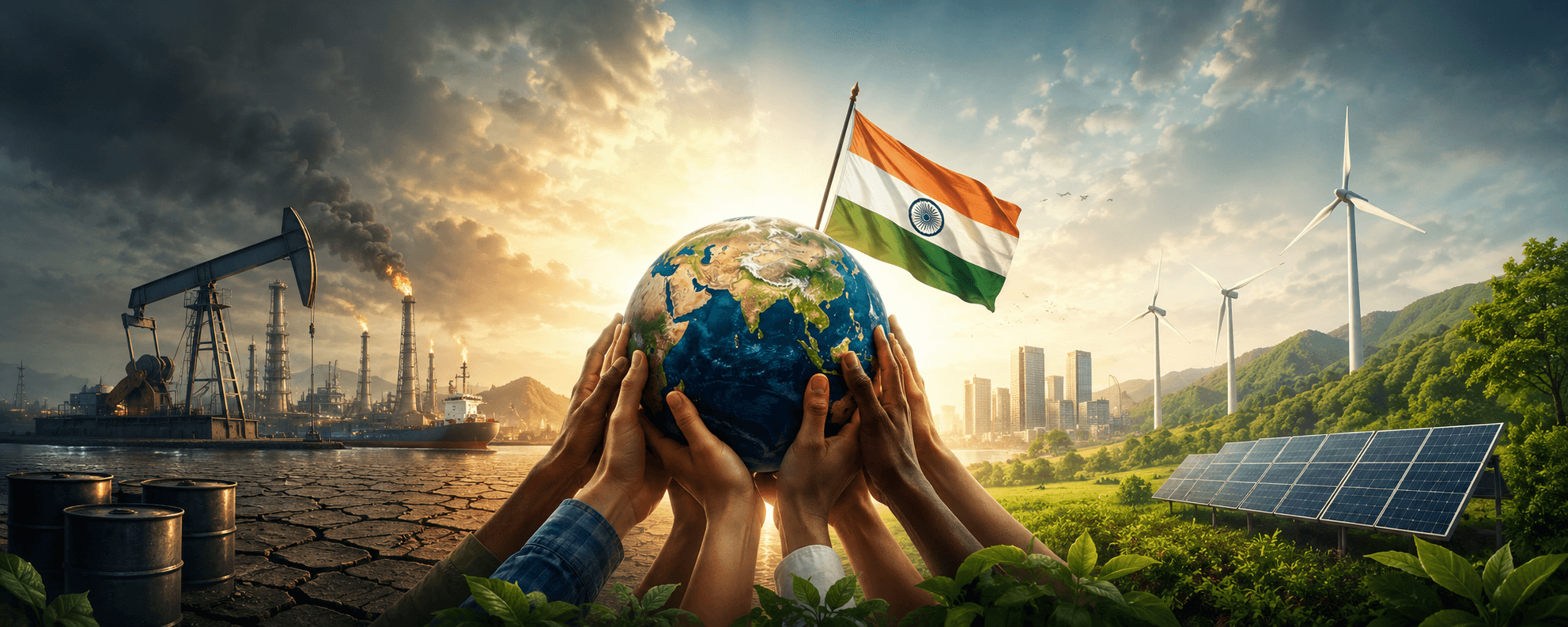
The Global Energy Crisis and Our National Duty: A Call for Unity
Vishal Kale
We are currently navigating a deeply challenging period in global history. The escalating conflict in the Middle East has created a severe crisis that goes far beyond regional borders, fundamentally threatening international trade and the everyday economic stability of nations around the world.
Recent addresses by global leaders, including the Prime Ministers of Singapore and India, have underscored the gravity of this moment. They have made it clear that this is not merely a distant geopolitical dispute; it is an economic storm that requires an immediate, unified response. As citizens, it is crucial that we understand the realities of the world today and come together to protect our nation's future.
Understanding the Global Challenge
The core of the current emergency stems from the blockade of the Strait of Hormuz—a crucial waterway through which a massive portion of the world's oil and gas supplies travel. This vital route has been effectively closed for over two months due to the ongoing standoff in the region.
The impact of this closure is staggering and easy to understand: when energy cannot flow freely, the cost of everything goes up. The world is currently facing a serious risk of what economists call "stagflation"—a deeply painful economic scenario where things become very expensive, but jobs and wages do not grow. This disruption will soon cascade from fuel shortages to the global supply of fertilizer, food, and other essential manufacturing needs.
Furthermore, even if the conflict were to pause today, returning to normal will take months. Clearing shipping lanes and repairing ports is a slow process. We are entering what has been aptly described as a "tough decade."
India's Vulnerability and Response
As a nation that imports nearly 90% of its oil, India is highly vulnerable to this volatility in the Middle East. The rising cost of energy stretches our national savings and drives up the cost of living for every Indian family.
In response, our leadership is engaged in dedicated diplomatic efforts, reaching out to nations worldwide to demand open and safe seas. The government is also working rapidly to secure emergency petroleum reserves and build stronger, more reliable supply chains with international partners.
A Call to Action: Putting Nation First
However, this unprecedented global situation demands more than just government action; it requires the active and willing participation of every Indian citizen.
In this critical hour, political divides must be completely set aside. Whether one supports the BJP, the Congress, or any other party, this is a moment to forget political affiliations and remember one simple, enduring truth: Nation First. Every individual, regardless of their ideology, is called upon to perform their patriotic duty. Even the smallest acts of conservation will act as a shield for the Indian economy.
I humbly appeal to all citizens to adopt the following measures to support our nation:
Leverage Gold to Strengthen the National Reserve
India spends billions of dollars importing gold, which severely drains the foreign exchange reserves we urgently need to buy highly-priced crude oil during this crisis. Consider postponing the purchase of new gold jewelry for the time being.
More importantly, citizens can actively strengthen the nation by utilizing the government's Gold Monetisation Scheme. By depositing idle gold sitting in household lockers into the banking system, citizens effectively lend the economic power of their gold to bolster the national economy, reduce our reliance on imports, and earn interest—all while safely retaining their wealth. It is a modern, powerful act of economic patriotism.Conserve Fuel and Energy
Every drop of fuel saved is money saved for India. Where possible, professionals and businesses should embrace work-from-home models to cut down on daily commutes. Opting for public transport, carpooling, and turning off unnecessary lights or appliances are small sacrifices that, when done by millions, save the country vast amounts in imported oil costs.Choose Domestic Over International Travel
We kindly ask citizens to limit discretionary overseas travel at this time. Vacationing within India keeps crucial capital inside the country. By exploring our own beautiful heritage sites, nature trails, and spiritual circuits, you protect our national reserves while directly supporting local businesses and the domestic tourism economy during a difficult period.
Standing Together
The standoff in the Middle East is a harsh test of global economic resilience. But India's greatest strength has always been its people. By answering this call to duty, conserving our resources, and putting the nation above all else, we can ensure that India remains stable, secure, and ready to emerge from this crisis stronger than ever before.
Vishal Kale
+91 9494-60-0808

About Us
Blogs
Our Services
Careers at KASA
Disclaimer
Office Address
2nd Floor, Chunawala Chambers, Next to Pune Shikshan Mandal, 103, Shivajinagar, Pune - 411005.
Other Offices
Delhi | Mumbai | Chhatrapati Sambhaji Nagar | Ahilyanagar | Nashik